There Are Nearly Two Tons of Sand on a Padel Court. Here’s Why.
I read somewhere that there are two tons of sand on a typical padel court.
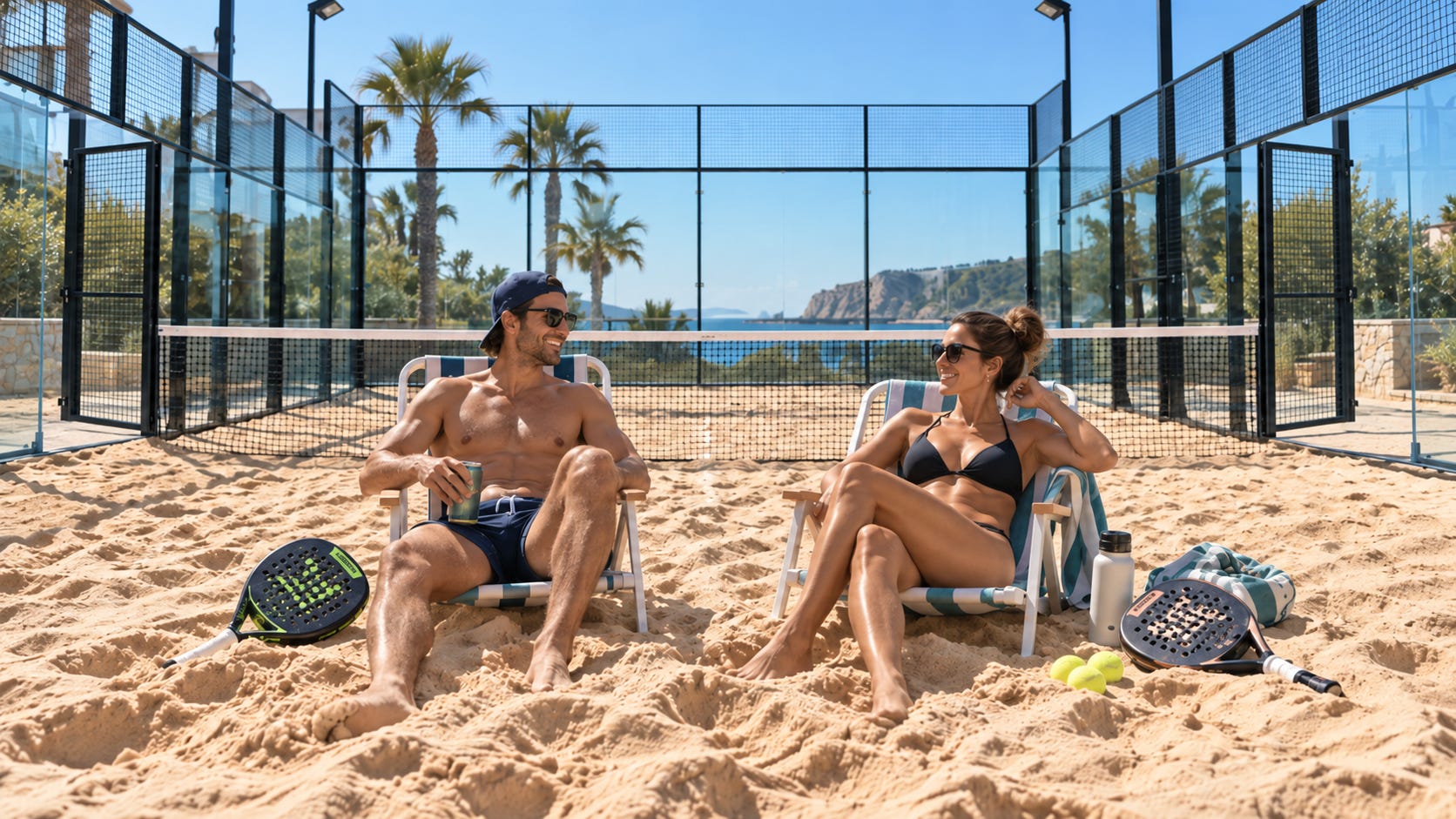
I read somewhere that there are two tons of sand on a typical padel court. That number seems implausible, or at least it did to me. Then again, I’m not super familiar with objects that weigh in the tons, so I asked Brevin Bennett, CEO of padel court manufacturer Off The Glass. Here’s what he said.
Q: I’ve read that there can be close to two tons of sand on a padel court. That sounds absurd. Is that number correct, and if so, where does all that sand go?
Bennett: Yes. That’s typically about how much gets shipped. On a new installation, you should expect somewhere around 3,600 to 3,800 pounds of sand. And yes, that sand also helps hold the turf in place.
Here’s how it works. You lay down the turf. Then you apply the sand and brush it down into the turf using a broom. And I can tell you, my biceps, triceps and shoulders are in a completely different state than they were a year ago from installing sand.
It’s physical. You’re brushing that sand and working it down into the turf. That’s what helps create a consistent ball bounce. If you have dead spots in the playing surface, it’s often because the sand wasn’t evenly distributed.
Q: Is it special sand? Unobtrusive sand? Could you use beach sand or ordinary backyard sand?
Bennett: It’s silica sand, and it needs to be a specific size. You want a granular size that can work its way into the turf, so it can’t be too large. But it also shouldn’t be so abrasive that somebody sliding on the court gets burned. You also don’t want extremely fine beach-type sand because, when it rains, that could wash out too easily.
You’re looking for that right combination: small enough to settle into the turf but heavy enough to stay in place.
Q: What size silica sand do you use?
Bennett: Silica 30/60 sand. That means the grain will pass through a No. 30 separation screen but will not pass through a No. 60 screen.
At the quarry, those products are separated based on size. It gives you a relatively fine granular sand that gets into the turf easily without washing away too quickly in rain.
Q: Let’s talk about the turf. Why isn’t the artificial turf simply glued directly to the concrete?
Bennett: The biggest reason is that artificial turf isn’t a static material.
It’s not like a piece of steel that doesn’t move.
Turf comes in multiple pieces, so you have to cut those pieces in perfectly straight, very precise lines. You glue the seams together using tape underneath, but you’re not gluing the turf to the concrete itself. Because with changes in temperature and humidity, the turf moves. And during play, it stretches. If someone is starting and stopping hard, they’re putting a lot of force into that material.
If we glue the entire turf surface to the concrete, when that stretching happens, the material has nowhere to move. Then you get wrinkles that can’t work themselves out.
If the turf isn’t glued to the floor, those wrinkles have the ability to work themselves out or be corrected.
Q: But if the turf can move, doesn’t that create an injury risk? Is that where the sand comes in?
Bennett: It’s important to understand what we mean when we say the turf “moves.” It isn’t moving underneath your feet. There are roughly 3,600 to 3,800 pounds of sand holding it in place.
That amount of weight keeps it essentially static during play. But because it isn’t glued to the concrete, players or maintenance crews can correct issues that develop in the turf.
Turf is probably every padel-court company’s number-one callback. If it’s installed properly, it’s a controllable variable, which is one reason we train our installers.
Q: What are those turf callbacks usually for?
Bennett: Usually shrinking or expanding caused by significant temperature changes.
Another common issue is simply that the court isn’t being maintained correctly and additional sand isn’t being added over time.
Q: Where do you get the turf? Is it basically the same indoor-outdoor turf used on football or soccer fields without the little black pieces of rubber?
Bennett: No. It’s specialized turf made for padel. We work with two different partners that I think very highly of. Most of our turf comes from Realturf. We also work with Mondo. Both companies make turf specifically designed for padel.
Q: What makes it different from high school football field turf?
Bennett: There are a couple major differences. First is the length of the turf. Padel turf is only roughly three-eighths of an inch thick, maybe just under half an inch. The artificial turf used on larger sports fields usually has longer fibers.
The underlying materials can be similar, but the shape of the fiber is different. Padel turf fibers have a curl to them that helps retain the sand and allows players to slide more effectively.
The infill is also different. Padel uses 100% sand infill. A football, baseball or soccer field may use sand plus rubber pellets to provide cushioning. So the shape of the fibers and the infill are the major differences.
First published on Scott Matulis Padel.
Read it on Substack