
Oversleeping in Mexico City
How a compact man taught me to be more compact
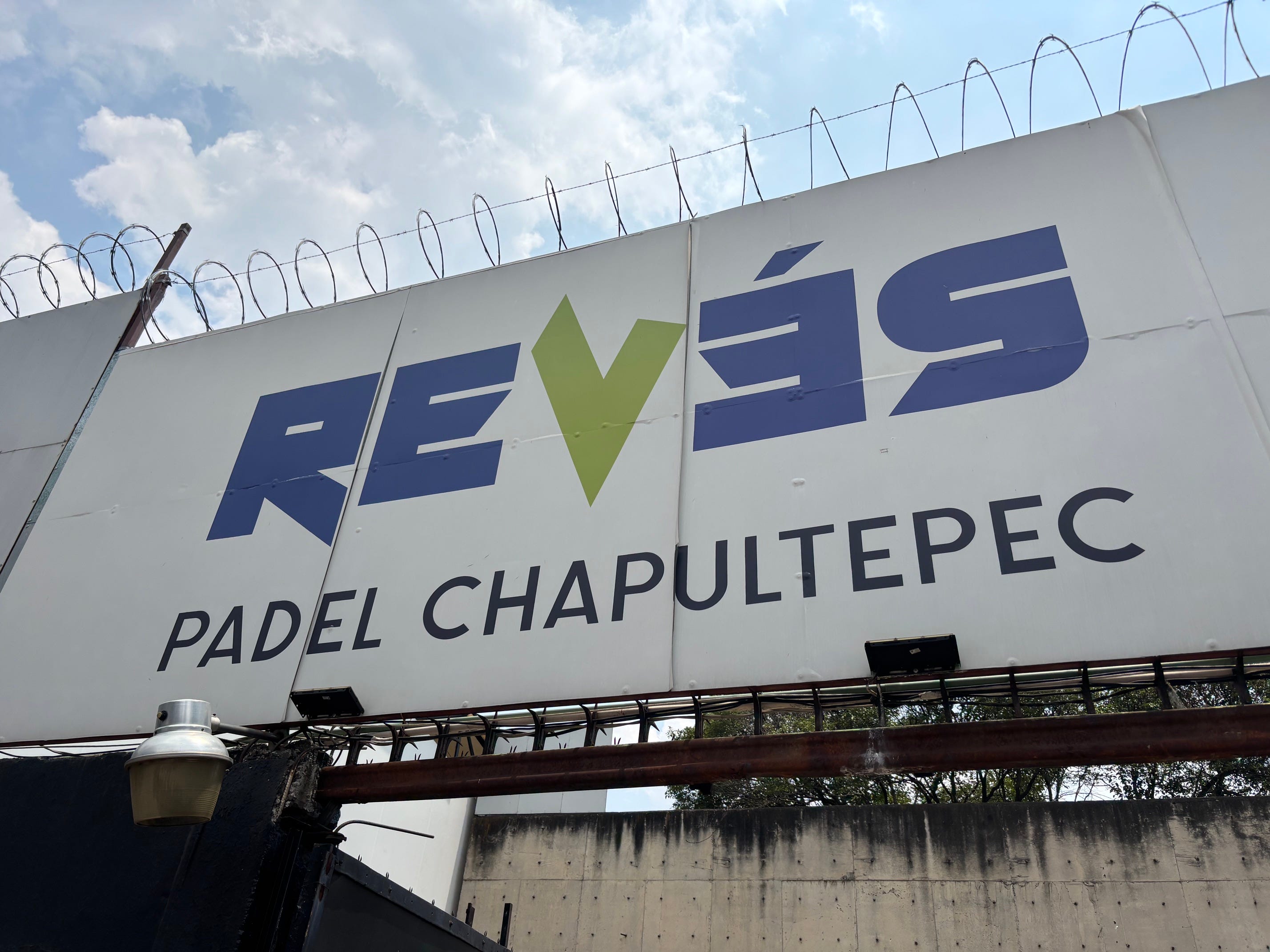
I was in Mexico City for a wedding and wanted to check out a couple of padel clubs while I was there. The plan was to visit a small neighborhood club and a big-name club and maybe get some tips from a big-time Mexico City coach.
I had an in. My padel friend Raj introduced me via text to Luis Fuentes, a Mexican padel player who agreed to meet me at Revés Padel Club between 9 and 11 a.m. and introduce me around. Sweet.
I did not, however, meet Luis.
The wedding ran late and raucous, I forgot to set an alarm and, like a drifter high on Jack Daniel’s, didn’t wake up until 11:30 the next morning.
Luis was gone, and doubtless pissed off, but I scrambled into some clothes and took an Uber to Revés Padel Chapultepec in the Miguel Hidalgo borough of Mexico City. It’s hard by Parque Lira, a public park on the grounds of a historic estate. The club itself sits at the top of a hill, at the end of a street that borders an industrial zone on one side and a residential neighborhood on the other. There’s a lot of foot traffic — it’s Mexico City, after all — and a smattering of graffiti for grit.
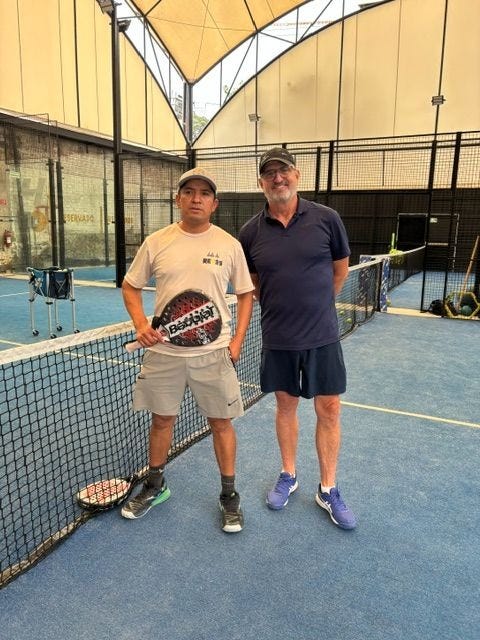
I walked up to the reception desk and “Hola’d” the three people sitting there. Nobody said anything, so I said, “Does anybody speak English?” One of the two women said, “Yes, I do” and I was in business. Her name was Alia, and she introduced me to Coach Mauricio Zulaica , the pro Luis was going to connect me with. Mauricio agreed to chat about padel in Mexico City and give me a few tips that might help my game.
Alia was gracious enough to translate, but once again, I wished I had paid attention in high school Spanish instead of trying to cheat my way through it. It would have helped in situations like this one, and I’m sure this article would be much improved had I done so. But I was a 15-year-old kid, and my focus was elsewhere. Susie Walker, man.
Through Alia, Coach Mauricio gave me the rundown on the club. Overall, it’s a community-based club where regulars come to play and hang out. Relaxed. Friendly. Local. It hosts the usual combination of informal play sessions, open matches and what Alia called “retas,” where players can show up, play for 90 minutes and meet other players. It also runs a few one-day “express” tournaments each year, the shorter format mostly because it has only four courts, but Mauricio brings in players from all over the city to play them.
Mauricio said he tries to create an experience where people of different levels can enjoy playing together. With a fair number of other clubs in the area, there is a lot of competition for players, so he works hard to bring people in, making phone calls and extending invitations.
The club also gets a fair number of tourists, including Americans who want to play some padel while they’re in the city on vacation. During typical U.S. vacation times, foreign demand makes up around 20 percent of the club’s activity. Mauricio said my American brothers and sisters generally don’t arrive with a very high padel level, but they take classes and are eager to learn.
When I told Mauricio I was a tennis player trying to adapt to padel, he listed off some unique challenges tennis players face when making the switch. These include wanting to play right away before we understand the game properly, and concentrating too much on hitting the ball and not enough on court positioning, tactics and how to construct a point.
I am, of course, a tennis player, and he was describing my soul.
So I asked Mauricio to hit a few balls with me and tell me what I needed to improve. He quickly agreed, grabbed a ball hopper and began feeding me balls. In the four minutes before I became exhausted, due to the altitude, surely, we ran through all the basics: groundstrokes, volleys, overheads and lobs.
Mauricio told me this, basically: I am a cocky, windmilling American with a serviceable overhead, strokes that are too long and movement that needs work.
I asked him for one solid tip, something I could take away from my visit and work on to improve my game. Revés, I had learned, means backhand in Spanish, and I had been fooling around with my backhand service return for a while, so I asked him to concentrate on that.
Mauricio agreed and hit a few balls to show me what it should look like. Short and compact, much like Mauricio himself. Who runs 5’6” max.
I asked him about the grip: eastern or continental? While what he said was lost in translation, the demo he gave me featured an eastern grip, which contradicted what coach ChatGPT had told me on several occasions. Coach Maurio is a professional and a real person, so I’m listening to him.
His main point was obvious: minimal backswing. Keep everything short and compact. Keep the stroke controlled and padel-specific. Topspin bad.
I thanked Coach Mauricio and Alia and hopped in an Uber to the next club, Padel Company Polanco, which Mauricio said is one of the most established padel operations in the city, and one of four Padel Company clubs in Mexico City.
My Uber was a stick shift of indeterminate make. My Uber driver was a lunatic. During the 20-minute drive, we almost caused seven accidents, got up on two wheels going around a corner, and during one dicey moment, I thought I was going to be sheared in half.
But based on the tips I got from Coach Mauricio, it was still worth the trip. If anybody sees Luis, tell him I’m sorry.
Comments
Comments settings

Like
Comment
Share
Add a comment…
Open Emoji Keyboard
No comments, yet.
Be the first to comment.
Start the conversation
First published on Scott Matulis Padel.
Read it on Substack