
How 3-Time World Champ Cecilia Baccigaulpo Helped Shape Padel
It’s not often you get to meet a legend. Tennis has Billie Jean King. Padel has Cecilia Baccigaulpo. Like King, Baccigaulpo isn’t just a great champion, she is instrumental to the development of the sport she loves. I met Baccigaulpo a…
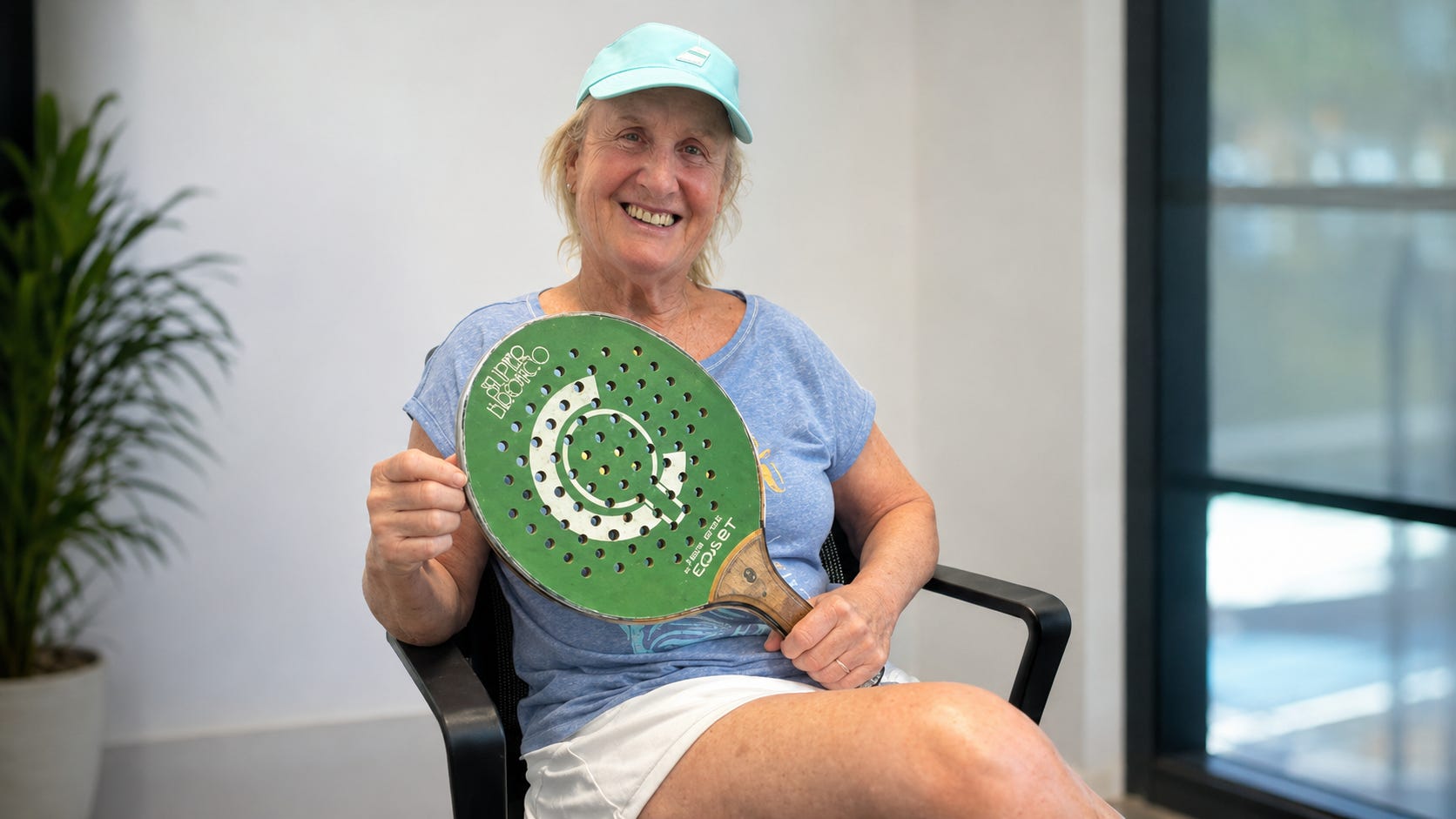
It’s not often you get to meet a legend. Tennis has Billie Jean King. Padel has Cecilia Baccigaulpo. Like King, Baccigaulpo isn’t just a great champion, she is instrumental to the development of the sport she loves.
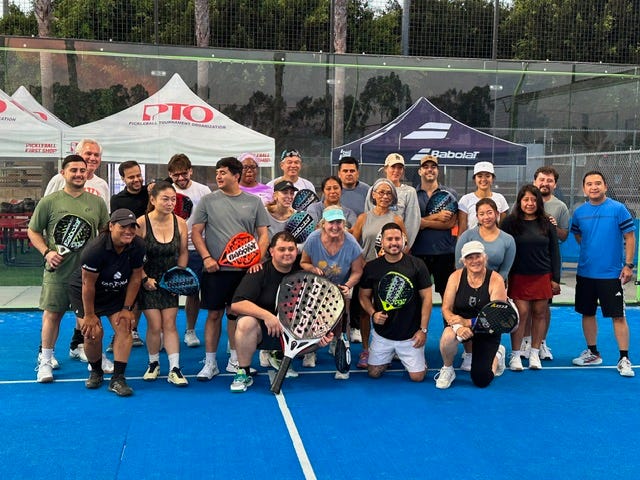
I met Baccigaulpo a couple of weeks ago at Taktika in Carson. Georgie Rosales, a former pro player in Argentina who now teaches padel at Taktika, brought Baccigaulpo to the U.S. specifically so American players could meet a legend and get a look into the history of the sport they are now, undoubtedly, addicted to. Rosales was nice enough to set aside a half hour for me to talk to Baccigaulpo before she was scheduled to teach a clinic to about 25 people.
In addition to being the number one women’s padel player throughout most of the 1990s, winning three world championships, captaining the Argentina women’s national team, pioneering women’s ability to play padel on domestic and international stages and starting a successful foundation, Baccigaulpo also introduced Diego Maradona to padel and coached him up.
But like a lot of us, Baccigaulpo discovered padel by accident.
“I first encountered padel when I was about 25,” she told me. “I was on vacation in Uruguay when somebody invited me to play. I was basically coming from the beach—I was wearing flip-flops—and they asked me to try this new sport. I had played tennis before, and I also played pelota paleta in Argentina with my brothers. I played a lot of doubles, and I have always been very team-oriented, so padel felt like a sport that was made for me.”
This was in 1986 when padel was still brand new in Argentina and everywhere else. According to Baccigaulpo, Argentines who were vacationing in Marbella, Spain played the sport there, liked it and brought it back to Argentina, particularly Mar del Plata. Baccigaulpo and the other players had to make the game up as they went along.
“We had nobody to learn from. We were teaching ourselves,” she says. “Today young players can watch professionals and coaches and learn established tactics. We did not have that.”
The Argentine Padel Association was founded in 1988 and padel started to explode. Baccigaulpo did her part, especially with women.
“I started bringing women together,” she explained. “There were women I knew in Mar del Plata who were playing tennis, and some had already started playing padel because that was where some of the first courts were. I would go to tennis tournaments and tennis events and tell women, ‘Come try this sport.’”
Baccigaulpo eventually started playing tournaments. With so few women playing competitively, Baccigaulpo sometimes entered men’s events. She showed me a picture taken at an early association event showing her surrounded by 20 men.
The thing is, at that point, the sport Cecilia Baccigaulpo was playing was not the same sport padel players play today. Rackets were made of wood with metal rims. Baccigaulpo had a few of them with her in Carson and they looked exactly like the paddle tennis rackets I used when I played that sport 30 years ago at Venice Beach.
Padel balls were scarce when Baccigaulpo was learning, so players used tennis balls. The courts she was playing on were made of cement. Even if you haven’t played padel with tennis balls, you can imagine how fast the ball came off the ground.
“There was a lot of bounce,” Baccigaulpo told me. I would imagine so.
Baccigaulpo also told me that the first glass-walled courts were in Argentina, not in Mexico or Spain. According to Relevo, in 1987, Coca-Cola wanted to televise a sponsored tournament in Argentina but the concrete walls blocked the views of both the spectators and the TV cameras. So they replaced the concrete with glass. Since each pane was framed, it made the courts look like cages.
Baccigaulpo played in the first Spain-Argentina international competition in Mar del Plata in 1988, representing Argentina’s women’s team. The next year, another Spain-Argentina competition, the 2nd Master Beefeater, was scheduled to be played in Madrid and Baccigaulpo was ready to go. But there was a problem.
“Initially,” Baccigaulpo said. “It was only for men. So I contacted the people in Spain and asked, ‘Why not the women also?’ I spoke with the president of the Spanish organization and with his daughter, who also played padel. They said that the next time, we should bring the women too.”
So the women went. The field included women from Madrid, Bilbao, Seville, Barcelona and Argentina. Baccigaulpo won it.
One of the cool things about those early Spain-Argentina matchups was that the two countries had developed different versions of padel with different rules.
“In Spain,” Baccigaulpo explained, “players could serve much higher, from around shoulder level. In Argentina, the serve was below the waist, more like it is today, and you had to bounce the ball before serving. There was also a rule in Argentina that the return of serve could not be volleyed. You had to let it bounce. That created a very different tactical game because you could not immediately attack the return of serve.”
“Like pickleball, for God’s sake?” I said. “You had to let the service return bounce like pickleball?” Baccigaulpo nodded. I imagined sorrow behind her eyes. “Yes,” was all she said.
In Spain, courts used synthetic turf, while Argentina used painted concrete. The craziest thing was that fencing on Argentine padel courts could only be between 1.3 and 1.4 meters high (which seems absurdly low). Spanish courts had 3-meter perimeter fencing like God intended.
It wasn’t until 1990s that the two countries got together and standardized the international rules.
Baccigaulpo continued playing throughout the 90’s. FIP’s historical rankings list her among the leading women consistently from 1990 through 1996. She won those three world championships I mentioned earlier in 1992, 94 and 96. She became a big deal and met Maradona.
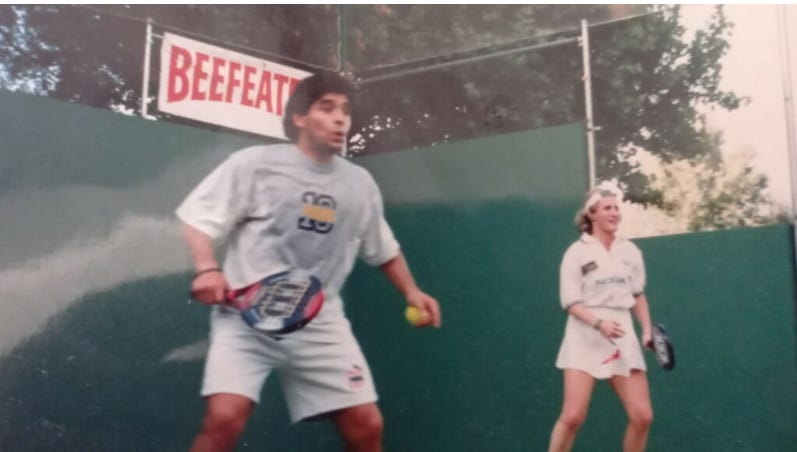
“I knew him because I was teaching him padel,” she said. “He came to one of the tournaments and helped me. He would play with the children. In 1992, when he was playing for Sevilla, he came to the World Championship to watch me. We became friends.”
Baccigaulpo eventually retired as a professional in anticipation of the birth of her first child. In 2000 she captained the Argentina national women’s team at the World Championship in Toulouse. She figured she was still good enough to go as a player, but decided she wanted the challenge of captaining.
In 2003, Baccigaulpo founded Fundacion Baccigaulpo.
“I created a foundation for children with special needs and began teaching them padel,” she says. “I felt it was a way of giving back to sports everything I had received. This sport has been a wonderful excuse to travel, meet people and enjoy life. I love teaching people. I have traveled to many countries teaching padel. For me, there is something special about giving somebody a racket and allowing them to discover the sport.”
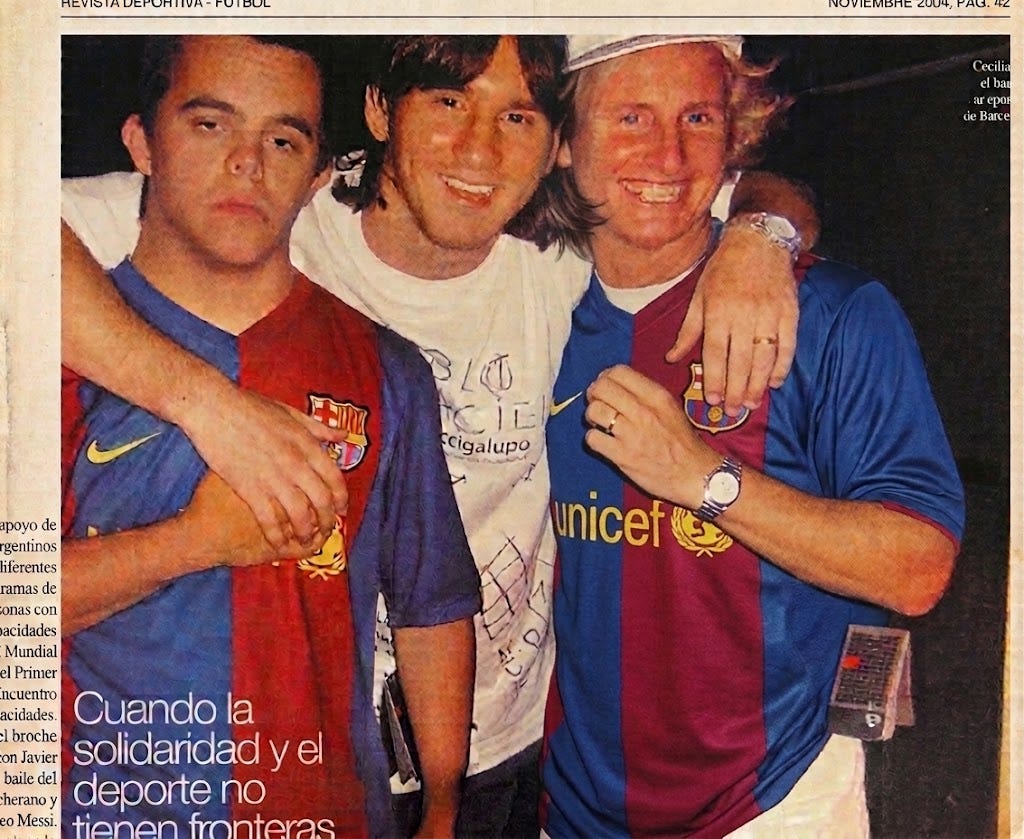
The foundation began with padel, but eventually expanded into other sports including tennis, soccer, hockey and basketball. By 2022 it was giving approximately 700 people with intellectual disabilities the opportunity to participate in sports over multiple cities. In 2006, Fundacion Baccigaulpo sent six children to Spain to take part in the first Ibero-American Meeting of Young People with Intellectual Disabilities. While they were there, Baccigaulpo arranged for them to visit FC Barcelona and play at Camp Nou with Lionel Messi and Ronaldinho, which must have been ridiculously awesome.
In addition to her foundation, Baccigaulpo co-owns an academy, Padel sin Fronteras with Monica Espina. She continues to travel the world teaching padel and spreading the good padel news. That’s how I met her in Carson two weeks ago. We watched a video of her on one of the big screens and I noticed that Baccigaulpo, back in the day, played the left side, even though she’s left-handed. I asked her why.
“We didn’t know back then,” she said. “It took me a while to figure out that I should be on the right side.”
First published on Scott Matulis Padel.
Read it on Substack