
Boast is Back. Can it Break Into Padel?
In 1973, American tennis pro Bill St. John saw American tennis players wearing European brands on the court and thought there should be an American alternative. Something cooler. St. John founded Boast to provide that alternative. Rocking…
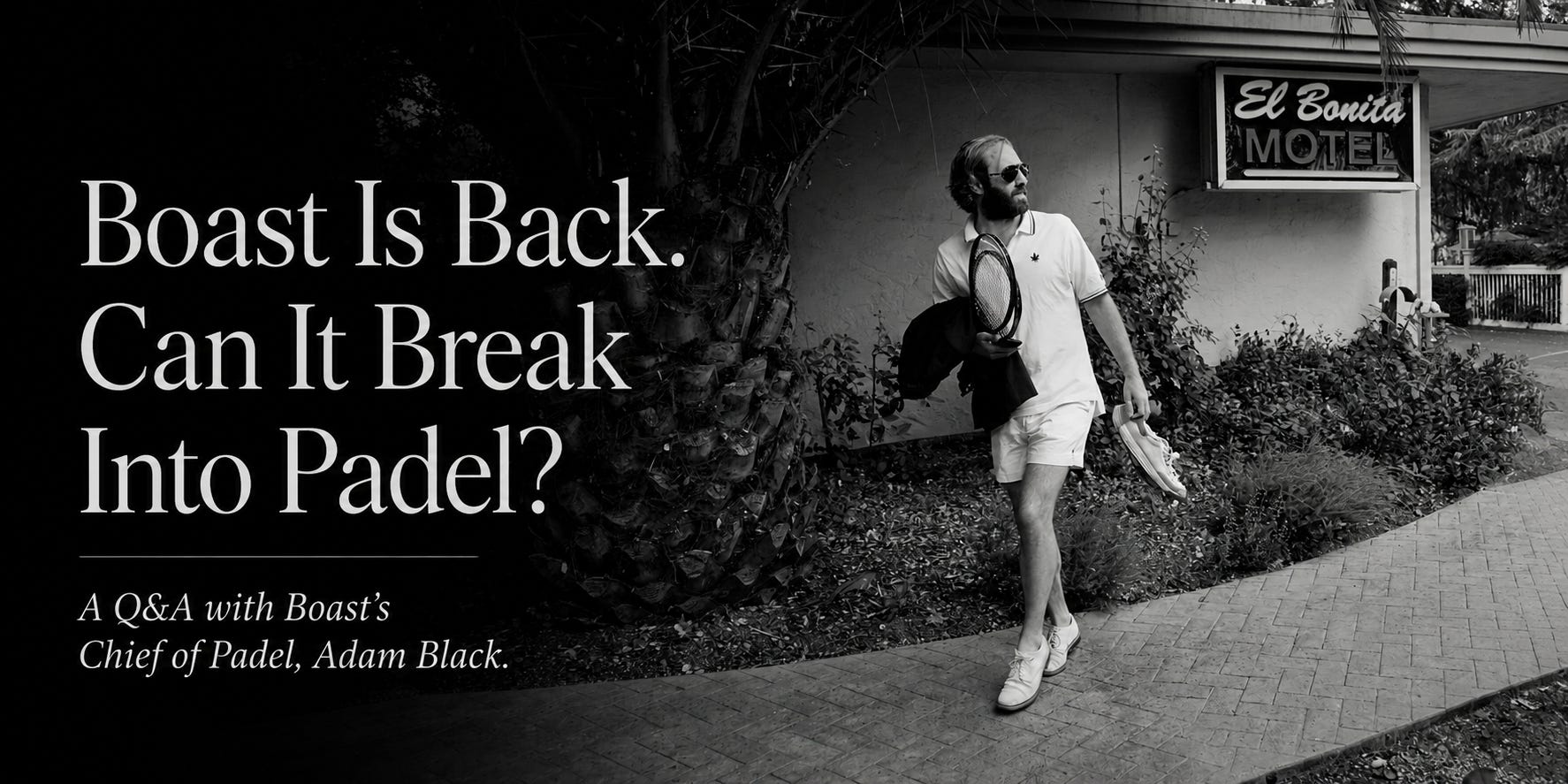
In 1973, American tennis pro Bill St. John saw American tennis players wearing European brands on the court and thought there should be an American alternative. Something cooler. St. John founded Boast to provide that alternative.
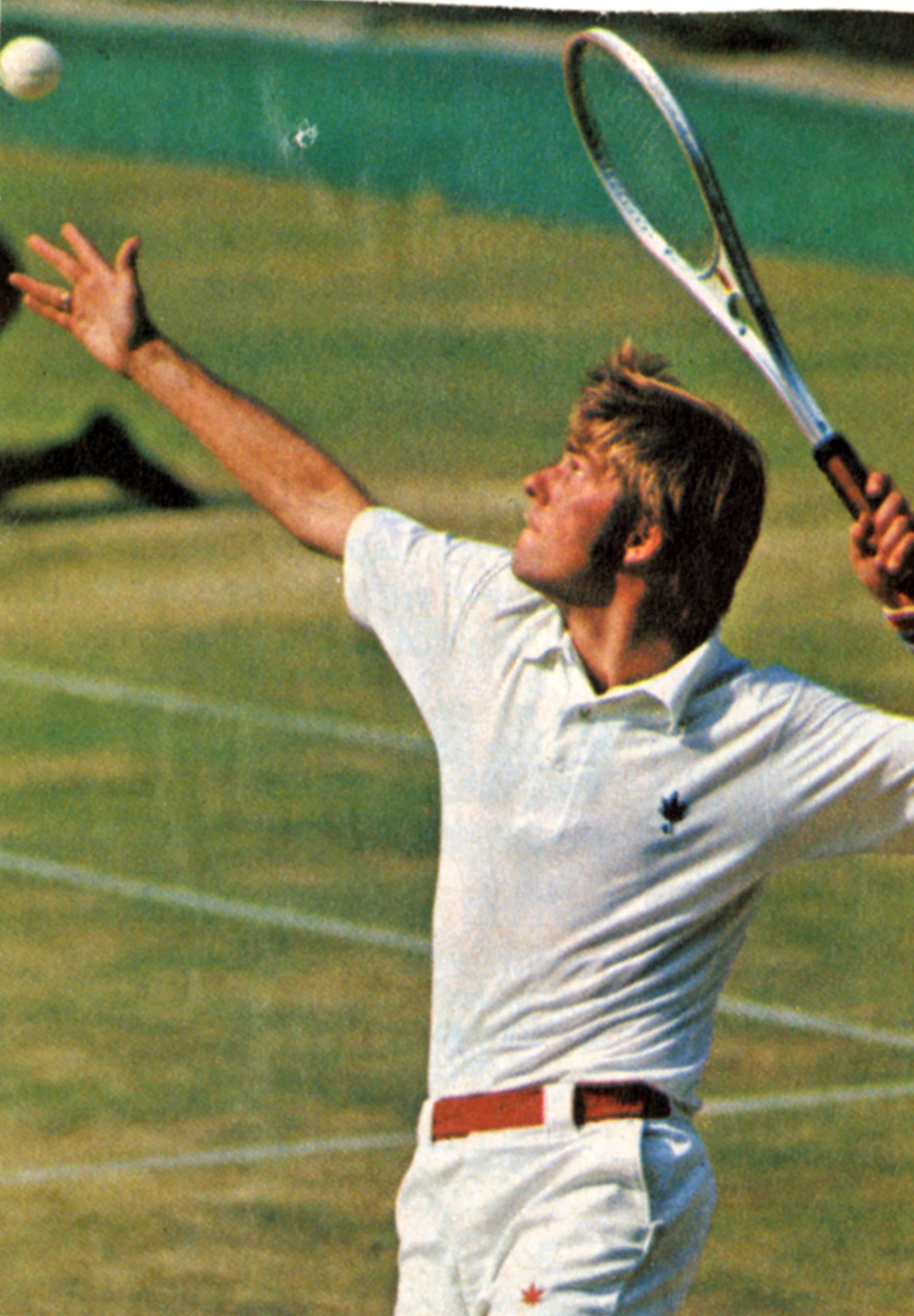
Rocking its iconic Japanese Maple logo, Boast grew throughout the 1970s and 80s. Roscoe Tanner wore Boast in the 1979 Wimbledon final. By the 1990s, however, Boast had largely faded from public view, although St. John continued selling apparel to tennis and country clubs. Snap to right now with American padel courts chock full of players sporting European padel brands like NOX, Pulco and Bullpadel.
Matt Feuer, a 30-year footwear industry vet, brought Boast back again in 2024, convinced that he could put an American clothing brand at the top of the rapidly growing padel market, not only in the U.S. but worldwide.
I sat down with the guy Feuer hired to do it, Boast’s new Chief of Padel, Adam Black, to see how he’s going to make it happen.
—---------------------------------------------
Q: I guess my first question has to be: Why would Boast, a brand that wants to be quintessentially American, hire an English guy to lead its padel push?
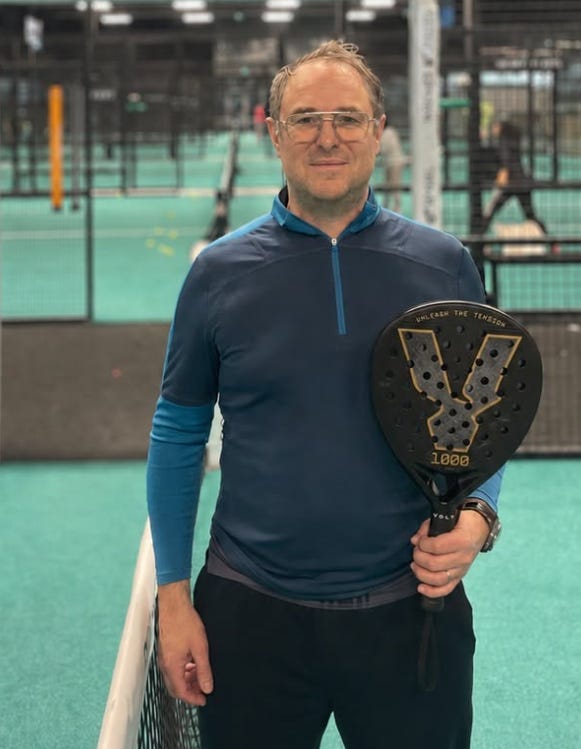
Adam Black: An Englishman in charge of padel for an American brand? It sounds unusual. Until you look at the sport. Padel was born in Mexico. It found its voice in Spain, its fire in Argentina and its future is everywhere. It crossed borders, changed accents and became a global phenomenon. Great sports do that. Great brands do too.
Boast hasn’t hired an Englishman. It has hired a racket-man with 50 years in rackets and 20 years in padel. Someone who understands the courts, the clubs, the players and the culture. The passport is incidental. The point is the experience.
Q: How did you first hook up with Boast?
Adam Black: I first met Matt, Boast’s owner, a couple of years ago at RacquetX. I think he liked the fact that I was completely involved in the padel community in the United Kingdom. At the time, I was building a retail business called LivePadel, qualifying as a coach and working with the Rafa Nadal Academy. My job was to bring the academy to the UK and introduce it to the British padel community. We ended up coaching about 500 players. I was living and breathing padel.
I have also been playing racket sports since I was seven. I’m 56 now. I played tennis for about 30 years, but as I got older and my knees deteriorated, I realized padel was the sport for me. I had actually been introduced to it about 20 years ago in Marbella. A friend of mine who is on the board of Manchester United had padel courts at his apartment complex there. I would visit every summer, mostly to play tennis, but he and the Spanish players kept telling me I had to try padel. I played it a few times each summer and found it exciting.
Eventually it became a much bigger part of my life.
I think Matt saw someone who had spent his life around racket sports, understood the padel community and also connected with the culture that produced Boast. I learned whatever fashion sense I have in the 1980s, when Boast was booming and tennis was entering a golden age. Matt and I bonded over stories about Sergio Tacchini, Fila and the tracksuits we wanted back then. When he showed me Boast, I immediately understood the spirit of the brand. I loved it, and I think he put those pieces together: an English guy who loves Boast, understands its culture and has played racket sports since childhood
.
Q: What does Boast mean to you? What was the culture around the brand that made it so distinctive?
Adam Black: Padel is growing quickly, but from a fashion and sports-performance standpoint, it is still very predictable. I’m speaking to you from the media room at a Premier Padel event, and almost every player is wearing a plain, round-neck shirt covered in sponsor logos. That is basically the uniform.
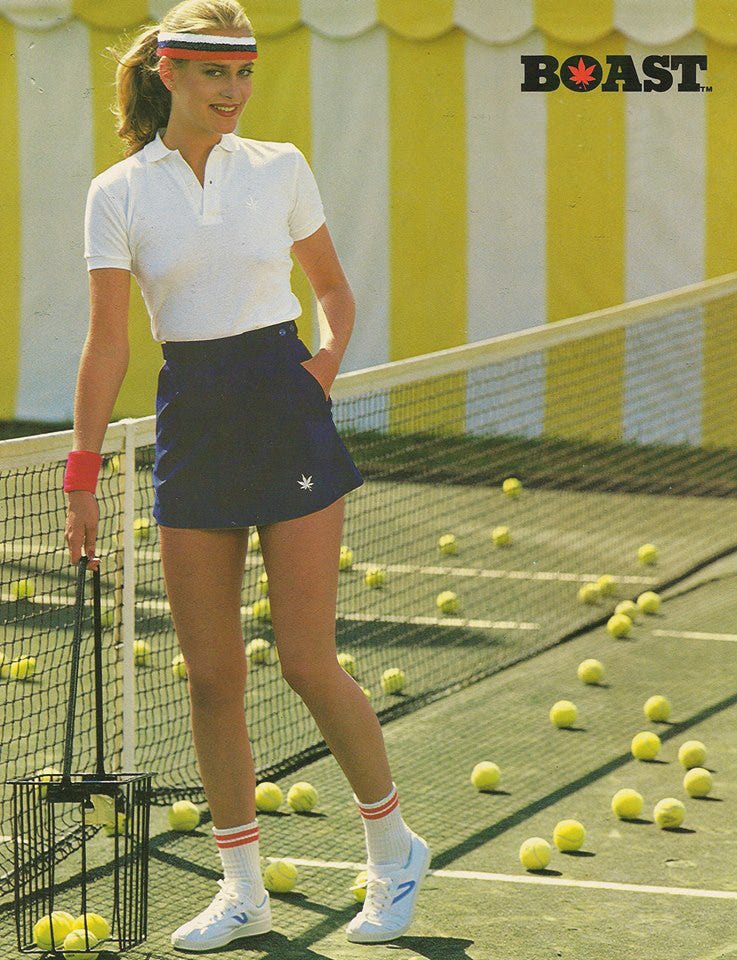
Boast is different. It captures a time when you would wear a sports shirt off the court and feel proud of it. It recaptures some of the magic, irreverence and emotion that many modern brands do not have. Padel brands, in particular, tend to be predictable. Boast is not.
Look at the imagery on the Boast website: two guys jumping into a swimming pool at what looks like a cheesy Las Vegas motel. Look at the trick shots and the tone. We are not trying to be the Roger Federer of the tour. We are more interested in being the bad boy or bad girl of the tour. The brand has a sense of humor. It is brave, in your face and willing to use a maple-leaf logo that famously looks like something else.
That personality is what attracted me. Boast is unpredictable and irreverent. It has emotional values that people can recognize immediately
.
Q: You also worked at Loaded magazine. How does that experience connect with what you see in Boast?
Adam Black: Loaded launched in the United Kingdom in the 1990s and inspired many magazines that followed it. At the time, GQ was one of the biggest men’s magazines in the country. Loaded came along and said, “We are not going to be GQ. We are not going to be predictable.”
We covered partying, comedy, football, music, actors and beautiful women without apologizing for it. We put people such as Liam Gallagher and Gary Oldman on the cover. We were not presenting the clean-cut, preppy boy next door. We were presenting the person you might not want dating your daughter, but whom you would definitely want at your dinner table because he was more interesting.
That is the connection I see. Boast has a personality. It is not trying to blend in. I think that part of my background probably appealed to Matt as well.
Q: What is Boast’s broad strategy for entering the global padel market?
Adam Black: There is a straightforward commercial answer. We have to build the online, retail, direct-to-consumer and wholesale sides of the business. We have to enter the right premium retailers first rather than rushing immediately into the mass market.
But padel adds another layer because it is exploding in particular markets around the world. Asia-Pacific is growing. Bali and Indonesia are important. Australia is coming. We need to be present wherever padel is developing in an exciting way. This is not only about the UK or the United States.
My role is to use the global network I have been fortunate to build. I have continued writing about padel even though journalism is not always the best-paid work, because the access is extraordinary. Before this conversation, I was sitting with the manager of one of the world’s leading players. Journalism has introduced me to players, managers, founders and executives who otherwise would never have taken my call.
For Boast, the opportunity is to look across that network and identify the teams, players, events, clubs and commercial partners with whom we should work. That is where the journalism, the padel community and the business strategy begin to fit together.
Q: Who do you write for currently?
Adam Black: I am freelance because I also run a business. I write for Padel Culture, one of the leading padel magazines in the UK, and for The Bandeja. I also write for The Daily Telegraph and for The New World.
The New World previously operated as The New European, and before that there was The European. I wrote its first major padel story, “Can Padel Take Over the World?” It was an interview with Enrique Buenaventura, founder of the Hexagon Cup. That article helped expand my network within padel and gave me access to many of the founders and senior figures who are now relevant to what we are building at Boast.
Q: Let’s focus on the United States. How do you break through here, particularly with consumers who may play tennis or padel but are not especially fashion-conscious?
Adam Black: The first advantage is that the people working on Boast genuinely care about sports fashion. If you came to my house and looked at my wardrobe, you would think it belonged in a museum: Sergio Tacchini, Ellesse, Fila, Lacoste and other classic racket-sports brands.
We also have an unusually hands-on team. The founder, the head of padel and the creative director are all directly involved in developing the collection. We have brought in a creative director with 18 years of experience at Fila, and she will work with Matt and me on the padel range. It is rare to have the founder, the category lead and the creative director all working together so closely on a new direction.
The first job is to create an exceptional collection that people in the padel world genuinely want. Then we take it to the important U.S. outlets where Boast already has relationships, including premium department stores, specialty retailers and country clubs. Boast is still early in its relaunch, but it is already in strong retail environments. I believe the padel range can open additional doors because so much of the current category lacks personality.
Q: What makes clothing specifically “padel clothing” rather than tennis, pickleball or golf clothing?
Adam Black: There is obviously a great deal of overlap among racket-sports apparel. One important difference is color. Tennis has traditionally been anchored in white, while padel gives us much more freedom in the colorways we use to express the brand.
Boast is already a tennis brand, and our tennis clothing tends to be somewhat more preppy and country-club-oriented. I see the padel collection as more urban, more expressive and more in your face. The existing padel collections are not doing anything especially adventurous, so our opportunity is to arrive with something more interesting from the beginning.
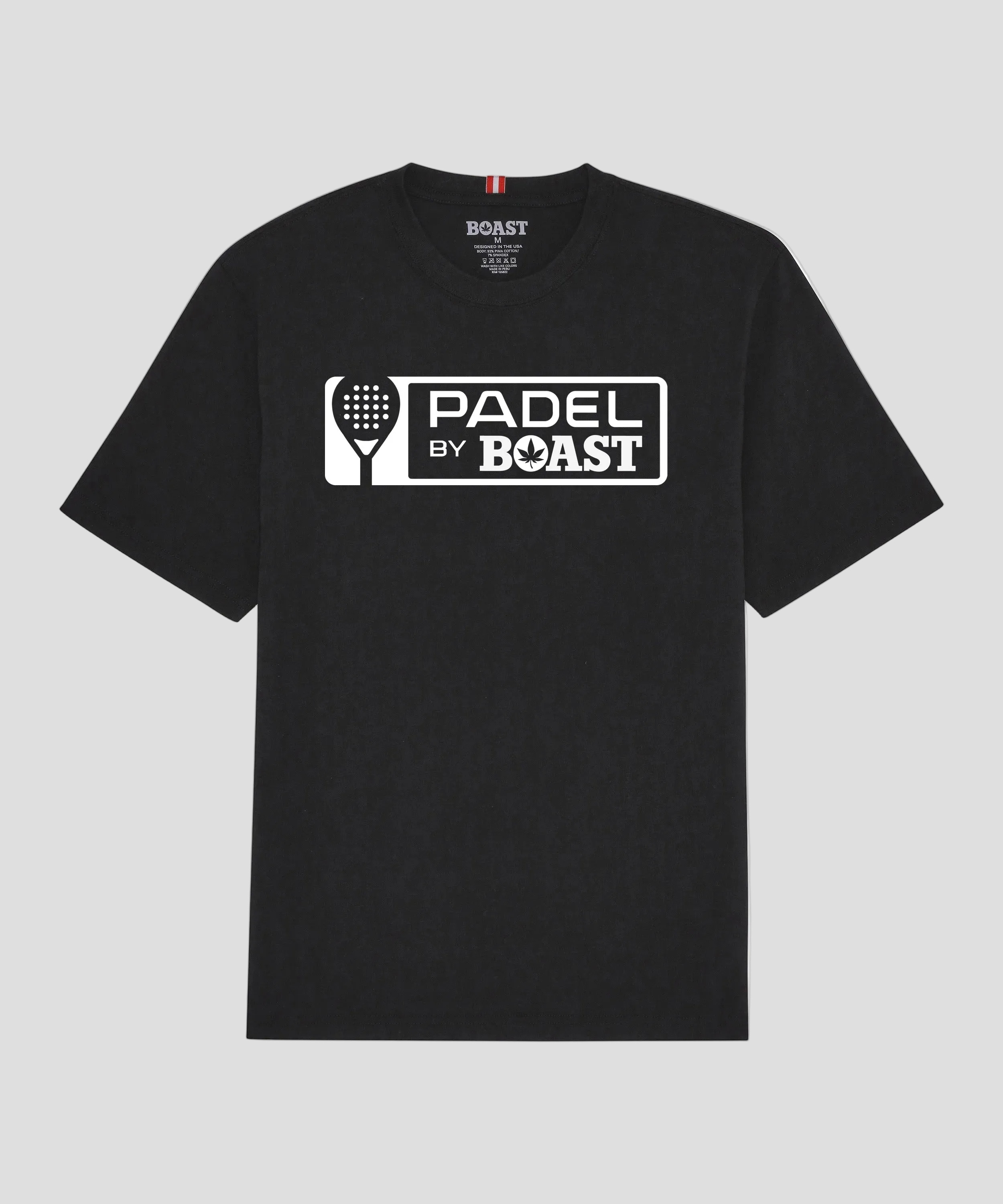
Q: Will the U.S. collection be fundamentally the same as the collection sold elsewhere, or do you have to account for different fashion tastes in different countries?
Adam Black: We will certainly consider the market, but I would not overstate the cultural divide. The important thing is to create a strong, recognizable Boast identity. Padel gives us permission to use color and take risks, and that is part of what makes the category attractive.
The collection has to feel authentic to Boast first. From there, we can make intelligent choices about products and colorways for particular retailers and markets. But the central idea—more personality, more irreverence and a less predictable look—should travel well.
Q: You describe the padel line as more urban, but in the United States padel is currently an expensive sport played largely by affluent people. How do you reconcile that?
Adam Black: Padel itself is not a rich person’s sport. I understand why it looks that way in the United States today, but that is a temporary stage of development. There are more than 35 million people playing padel around the world, and there are roughly one million players in the UK. Most of them are not wealthy. They are ordinary people.
What you are seeing in the United States is the beginning of the market, not its final form. The U.S. is behind the UK and many other countries in padel development. Most of the first American clubs have targeted affluent customers, often combining padel with wellness, hospitality or luxury positioning.
That is understandable at the beginning, but it is not how the sport will reach its full potential. Taktika is an interesting American example because it has worked with public entities and developed outdoor courts at more accessible prices.
In the UK, you can play for around $50 an hour in many places, and sometimes for less. The very expensive American clubs are not a sustainable model for the entire sport. If padel is going to grow across the United States, it will grow because more affordable clubs open for people with normal amounts of disposable income.
The same transition is happening in the UK. Many of the first clubs were built in affluent communities. Now more operators understand that everybody deserves access to padel and that the sport has to be democratized. I am involved in building a club in East Manchester in an area where the average salary is roughly $30,000 to $40,000. The community includes shift workers, electricians, plumbers, teachers, nurses, firefighters, shop owners and students. Other entrepreneurs built where the money was. We said, “Why not bring padel to everyone?”
That is how the sport will grow. It may begin with wealthy early adopters, but eventually it has to be played by ordinary people.
The sport has tens of millions of players globally. In mature markets, most of them are not wealthy. They are normal people making normal decisions about what they can afford to spend on recreation. The same thing will eventually happen in the United States.
Q: What specifically does Boast have to do to succeed as a padel brand in the United States? What is job one?
Adam Black: Job one is to be sold wherever padel is currently played. Almost neck and neck with that is getting the padel line into the retailers where Boast is already sold. The third priority is reaching tennis retailers that do not yet carry Boast and opening their eyes to the padel opportunity.
That is a 12-month job, not something that happens overnight. We have to build club distribution, deepen existing retail relationships and create new specialty-retail relationships at the same time.
Q: Is the plan simply to approach retailers, or will Boast also sponsor professional players, local players, clubs and events?
Adam Black: We are developing that now. The founder and I are reviewing a detailed creative proposal outlining ways Boast can position itself as an exciting padel brand and generate attention.
We are not as large as Adidas or Nike, so we have to create our own noise. Boast has already been involved in notable tennis activations, including Delray Beach and an event at Madison Square Garden. We want to build on that approach and create more impact in padel.
I cannot announce the specific plans yet, but what we do will turn heads. It will be irreverent, different and designed to punch above our weight. We are not going to win by simply buying a huge amount of conventional advertising or paying the biggest influencer an enormous fee. We are going to do things under the radar, come out fighting and try to surprise the rest of the market.
First published on Scott Matulis Padel.
Read it on Substack